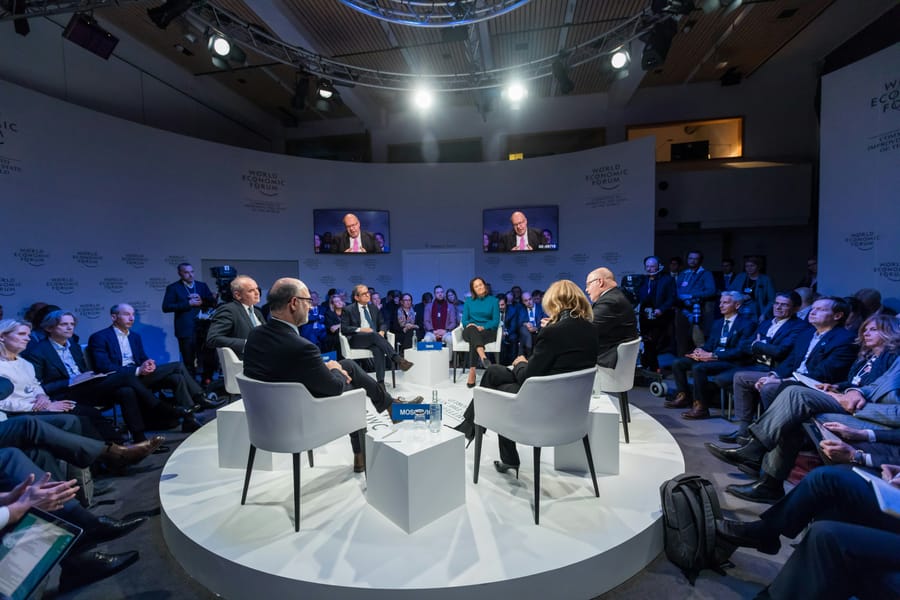
At the 2026 Davos World Economic Forum, AI was treated as one of the largest infrastructure buildouts in history – on a par with railways, electricity and the internet – and discussions centred on control, governance and timing rather than on whether AI would reshape the world. According to a Boston Consulting Group presentation delivered at a CEO breakfast during the forum, 72 per cent of chief executives now regard themselves as the primary decision-makers on AI, and nearly all expect AI agents to deliver a positive return on investment by 2026.
Ahead of the forum, former OpenAI board member Helen Toner told the US Congress that human-level AI could arrive within one to three years and that it could pose an existential risk. Elon Musk, making his first-ever appearance at Davos, predicted that AI would become smarter than any individual human by the end of 2026 and would surpass all of humanity's combined intelligence within five years, whilst also announcing that Tesla would begin selling humanoid robots to the public by 2027. Palantir CEO Alex Karp warned that AI would destroy jobs linked to the humanities and that Europe was falling behind the United States and China in AI adoption, whilst BlackRock CEO Larry Fink cautioned that early AI gains were flowing to the owners of models, data and infrastructure, potentially replicating the damage that globalisation inflicted on manufacturing workers. According to Forbes, AI training compute increased almost fourfold over the past year whilst inference costs fell dramatically, and the bottleneck has shifted from models to infrastructure – specifically payment rails, standardised APIs, energy supply and data centre capacity.
The 2026 Davos World Economic Forum made unambiguously clear that AI is no longer a future risk to be managed but the defining force reshaping global economic and geopolitical power. The forum's central takeaway was that infrastructure, not models, will determine the pace of AI deployment, and that the countries which successfully convert AI into sustained economic growth will be the ones that write the rules – whilst the rest risk becoming dependent on foreign players.
Sources:
1.
What Davos 2026 Revealed About The Future Of AI And Global Power
2.

3.