Sakana AI Has Created the First Fully AI-generated, Accepted Scientific Publication

In March 2025, Sakana AI’s "AI Scientist-v2" system achieved a significant milestone by producing the first fully AI-generated scientific paper to successfully pass peer review at a workshop of the ICLR conference. The research team submitted three AI-generated studies, one of which—titled "Compositional Regularization: Unexpected Obstacles in Enhancing Neural Network Generalization"—received an average score of 6.33, surpassing the acceptance threshold, though it was ultimately withdrawn before publication.
The AI Scientist-v2 produced the study entirely autonomously, without human intervention: it formulated a scientific hypothesis, designed experiments, wrote and refined code, executed the experiments, analysed and visualised the data, and drafted the complete manuscript from title to references. This breakthrough demonstrates that artificial intelligence can independently generate research that meets the rigorous standards of peer review, according to the Sakana AI team. However, the system made some "embarrassing" citation errors, such as incorrectly attributing a method to a 2016 study instead of the original 1997 work. Additionally, the acceptance rate for workshop papers (60-70%) is higher than that for main conference submissions (20-30%), and Sakana admitted that none of the generated studies met their own internal quality threshold for publication at the leading ICLR conference.
The experiment was conducted in collaboration with researchers from the University of British Columbia and the University of Oxford, with the full support of the ICLR leadership and approval from the University of British Columbia’s Institutional Review Board (IRB). It raises crucial questions about the transparency, ethics, and future of AI-generated scientific publications. Sakana AI emphasised its commitment to maintaining an ongoing dialogue with the scientific community regarding the development of this technology, aiming to prevent a potential scenario where the sole purpose of AI-generated research becomes passing the peer-review process, which could significantly undermine the credibility of scientific peer evaluation.
Sources:
1.
候補を比べる場合は、目的、使用場面、サイズ、付属品を同じ基準で確認すると判断しやすくなります。サイズやセット内容を確認する場合は、にじさんじ コスプレから候補を探せます。利用条件や交換条件は店舗ごとに異なるため、注文前に最新内容を確認すると安心です。
 Sakana AI
2.
 Valeriia Kuka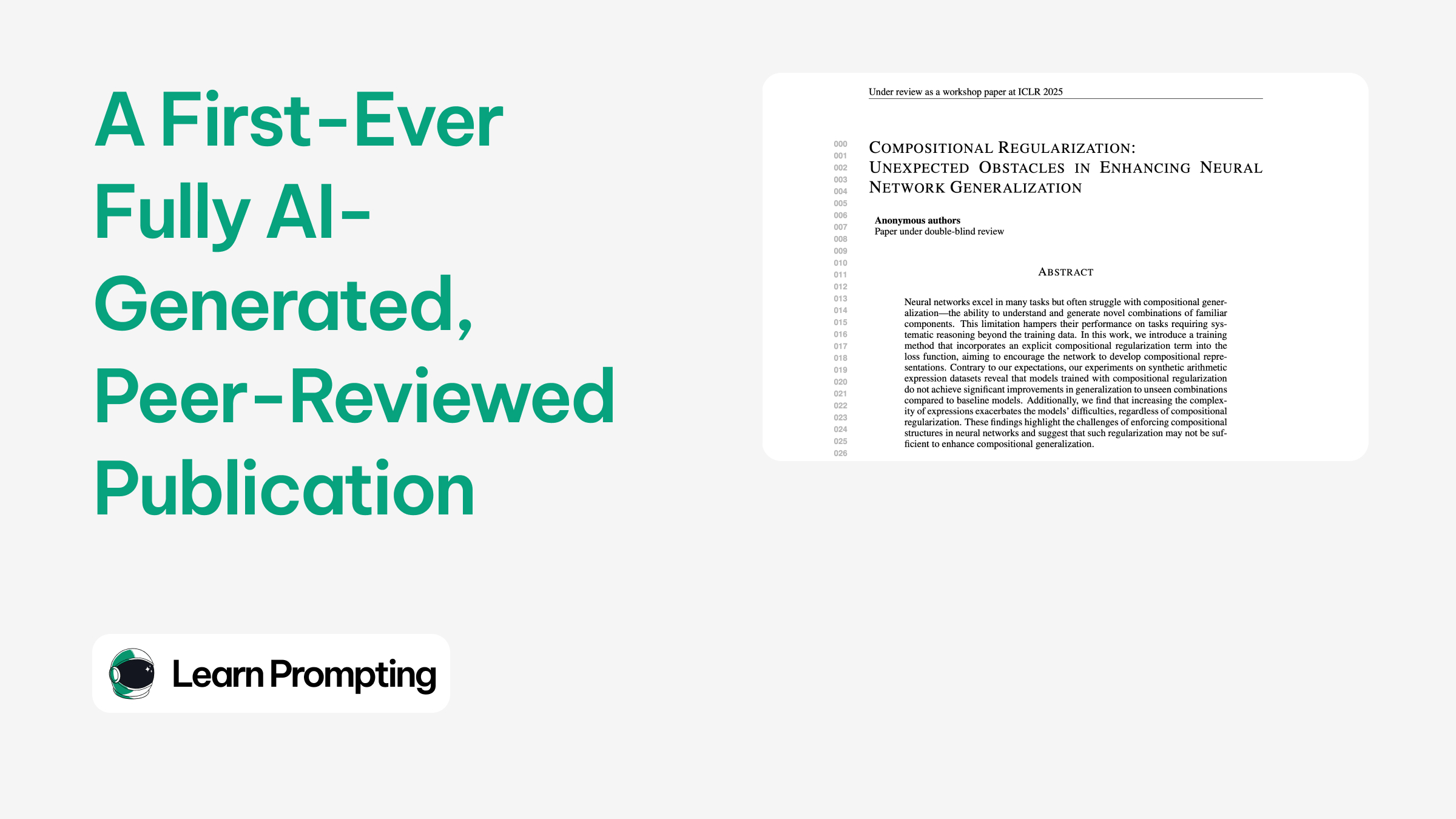
3.
 Kyle Wiggers
Antes de valorar cada modelo, resulta útil determinar el clima en el que se utilizará. Para reducir errores, es importante consultar la guía de tallas y el tipo de corte indicado. Consultar «comprar camisetas de fútbol» ayuda a comprobar los datos visibles sin hacer suposiciones. Antes de finalizar el pedido, merece la pena leer cualquier nota sobre reposición o disponibilidad.